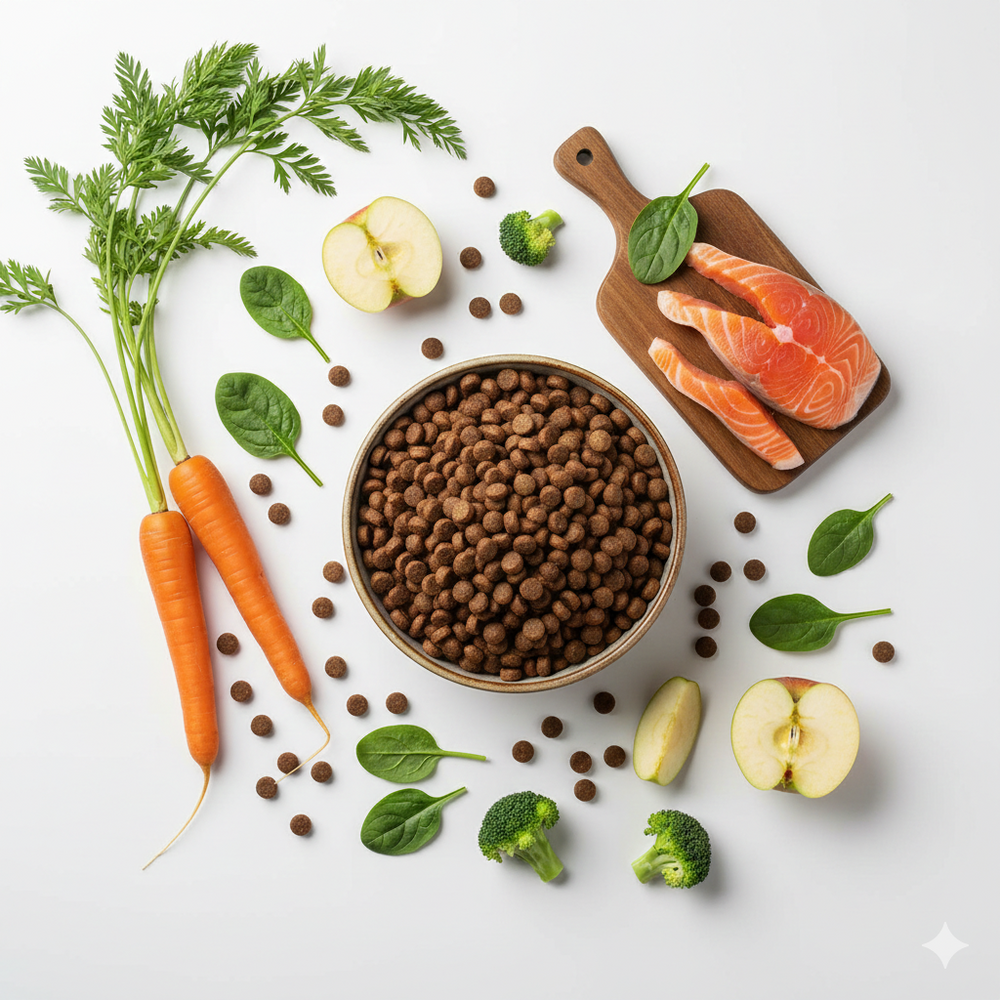
Almost all bad experiences when switching dry food are not the new food's fault: they're down to rushing. A dog's digestive system needs a few days to adapt its gut flora to a different recipe, and that process follows a fairly well-known schedule.
The 7-day schedule, mixing the new food with the usual one in the same bowl:
- Days 1 and 2: 25% new dry food and 75% old.
- Days 3 and 4: half and half.
- Days 5 and 6: 75% new dry food and 25% old.
- Day 7: 100% new dry food.
For dogs with sensitive digestion, senior dogs, or dogs coming from a very different food, stretch this same schedule to ten or twelve days. Never the other way around.
The three mistakes that almost always spoil it:
- Switching all at once because the previous bag has run out. That's why it's best to order the new one while you still have a week of the old one left, not when you can see the bottom of the bag.
- Changing the amount at the same time as the recipe. One change at a time: first the recipe, and once it has been stable for two weeks, adjust the portion if needed.
- Adding new things in the same week: new treats, a food topper, a supplement. If something upsets your dog's stomach, you won't know what caused it.
What's normal and what isn't: slightly softer stools for the first two or three days, or your dog drinking a little more, is within what to expect. Outright diarrhoea, vomiting or refusing to eat is not: in that case, stop the transition, go back to the previous food and consult your vet.
If you're planning to change their recipe, now is a good time: getting back into the September routine, with steady schedules and less heat, is the easiest week of the year to do it.
Related Products
If the switch is because of a skin or digestion problem, these are the dry foods used for that.
Keep reading: hypoallergenic dry food for dogs: how to tell if your dog needs it · dog stools: signs that their food agrees with them