Your dog's gut is home to an enormous population of bacteria that help them digest food, make the most of nutrients and keep the unwanted ones in check. It's called the microbiota, and looking after it comes down to two things that are constantly mixed up.
- Probiotics: the good bacteria themselves. They're the tenants.
- Prebiotics: the specific fiber those bacteria feed on. It's the pantry. Without a pantry, the tenants don't last.
Hence the usual confusion: a lot of people buy a jar of probiotics and change nothing about the diet. It's like moving tenants into a house with no food. What sustains the effect over time is what your dog eats every day, not a two-week jar.
How can you tell when this part is well covered?
- Firmer, more predictable stools (the clearest sign, and the first to show up).
- Less gas and fewer tummy rumbles after eating.
- Better use of what they eat: same portion, better body condition.
- Over time, a healthier-looking coat, which is where good digestion shows first.
The practical part: sudden diet changes, antibiotics and dry food loaded with grains are what upset that gut flora the most. And what keeps it in order is wonderfully boring: a digestible, consistent recipe with no surprises.
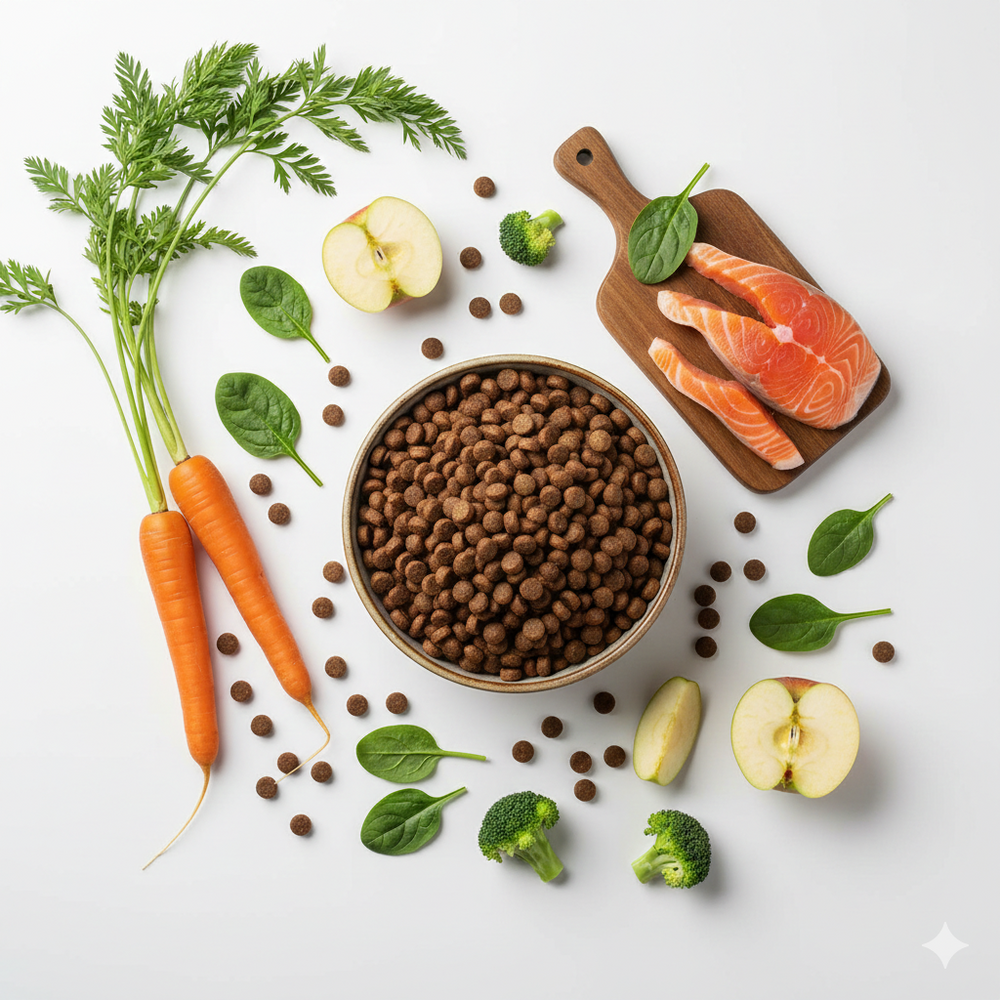
Bioprotein is the Togo recipe designed for exactly that: hypoallergenic, grain-free and with a highly digestible protein. It's also the one people who have tried it buy again most often, which is usually the best sign that dogs do well on it.
Related Products
Where to find them already formulated, without buying the supplement separately.
- Bioprotein, with probiotics in the recipe
- neutered/spayed cat dry food with probiotics
- supplements and vitamins
Keep reading: your dog's gut microbiome: how to look after it · dog stools: signs that their dry food agrees with them